Our First Obstacle
The data set obtained was smaller than initially planned, we adapted our approach to work effectively with this limitation. Our custom-built Python program extrapolated this data, allowing us to generate a broader and more reliable data set from the available samples.
ISS Results
| datetime | yaw | angular_velocity | linear_velocity |
|---|---|---|---|
| 12:10.8 | 3.729 | -0.001 | -6786.127 |
| 12:16.9 | 3.944 | -0.005 | -33930.685 |
| 12:23.0 | 4.395 | -0.004 | -27144.548 |
| 12:29.0 | 4.608 | 0.002 | 13572.274 |
| 12:35.0 | 3.814 | -0.001 | -6786.137 |
A Sample of our Extrapolated Results
| datetime | yaw | angular_velocity | linear_velocity |
|---|---|---|---|
| 17:12:11 | 3.729 | -0.001 | -6786.14 |
| 17:12:17 | 3.944 | -0.005 | -33930.7 |
| 17:12.23 | 4.395 | -0.004 | -27144.5 |
| 17:12:29 | 4.608 | 0.002 | 13572.27 |
| 17:12:35 | 3.814 | -0.001 | -6786.14 |
| ... | ... | ... | ... |
| 20:11:40 | 25.276 | 0.001 | 6786.137 |
| 20:11:47 | 15.297 | 0.003 | 20358.41 |
| 20:11:52 | 15.307 | 0.002 | 13572.27 |
| 20:11:59 | 15.314 | 0.001 | 6786.137 |
| 20:12:04 | 15.319 | 0.001 | 6786.137 |
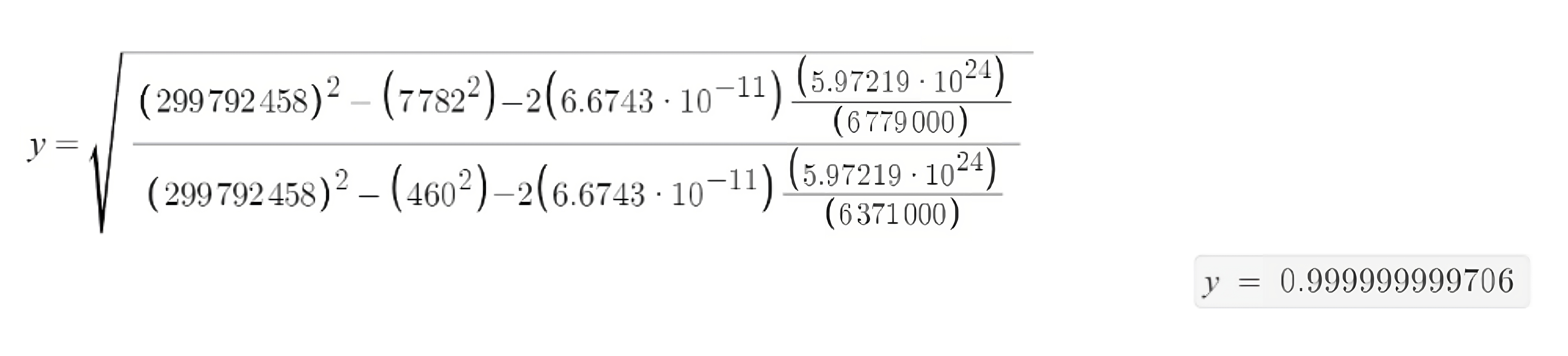
Our results allowed us to determine that the average velocity of the ISS was: 7782.166785m/s
Plugging our values and constants into Energy Ratio Equation